If you’re comparing PPF vs vinyl wrap, you’re already asking the right question. In Etobicoke, Toronto, Mississauga, Brampton, Vaughan, and across the GTA, vehicle owners are looking for smarter ways to protect paint, upgrade appearance, and maintain resale value—without committing to permanent paint work.
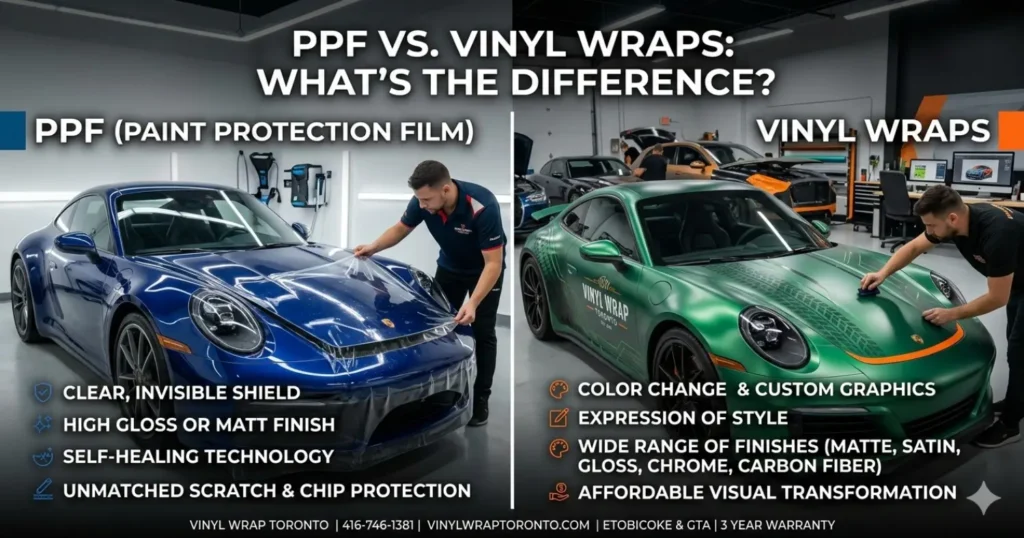
But while paint protection film (PPF) and vinyl wraps are both applied to the exterior of a vehicle, they serve very different purposes. PPF is built primarily for impact and chip protection, while vinyl wraps are designed for colour change, branding, and visual customization (with some protective benefits, but not the same as PPF). Choosing the wrong product can mean wasting budget—or missing the results you actually want.
This guide breaks down the real differences between PPF vs vinyl wrap, including cost, durability, installation, best use cases, and common mistakes we see in Ontario.
Quick Definitions: What Is PPF and What Is a Vinyl Wrap?
What is Paint Protection Film (PPF)?
Paint protection film is a clear (or sometimes satin/matte) urethane film installed on painted surfaces to protect against:
- Stone chips
- Road debris
- Minor scratches and scuffs
- Bug splatter and staining
- UV-related fading (depending on product)
PPF is typically thicker than vinyl and is engineered as a protective barrier first.
What is a Vinyl Wrap?
A vinyl wrap is a coloured or printed vinyl film used to change how a vehicle looks. Wraps are most commonly used for:
- Full colour changes
- Partial wraps
- Decals and lettering
- Fleet branding and graphics
- Specialty finishes (matte, satin, metallic, textured)
Vinyl provides some protection from light wear, but its primary job is visual transformation.
PPF vs Vinyl Wrap: The Core Difference
When customers ask us which is “better,” the best answer is: better for what?
Here’s the simplest way to think about it:
- PPF = protection-first
- Vinyl wrap = appearance-first (plus light protection)
Both can be valuable, but they solve different problems.
PPF vs Vinyl Wrap: Side-by-Side Comparison
| Feature | Paint Protection Film (PPF) | Vinyl Wrap |
|---|---|---|
| Primary purpose | Protect paint | Change appearance / branding |
| Thickness | Thicker (typically) | Thinner (typically) |
| Rock chip protection | Excellent | Limited |
| Scratch resistance | Higher (often self-healing) | Moderate |
| Visual options | Mostly clear or satin | Huge range of colours/finishes |
| Best for | Daily drivers, new cars, high-value vehicles | Colour changes, marketing, fleets |
| Removal | Usually safe when done correctly | Usually safe when done correctly |
| Typical lifespan | Often longer than wraps | Often shorter than PPF |
When PPF Makes the Most Sense in Ontario
Ontario roads can be hard on vehicles—especially with winter salt, sand, gravel, and highway driving. PPF is most valuable for drivers who want to keep original paint looking new.
PPF is a strong fit for:
- New vehicles (protect factory paint early)
- Highway commuters in the GTA (401/427/QEW traffic)
- Luxury and performance vehicles
- Leased vehicles where paint condition matters
- Fleet vehicles that rack up mileage quickly
High-impact zones where PPF is commonly installed
- Front bumper
- Hood (partial or full)
- Fenders
- Headlights
- Mirror caps
- Door edges and handle cups
- Rocker panels
When Vinyl Wraps Make the Most Sense
Vinyl wraps shine when the goal is appearance, branding, or a dramatic style upgrade. They’re popular across Toronto, Etobicoke, Mississauga, Brampton, and Vaughan because they offer a high-impact change with less permanence than paint.
Vinyl wraps are a strong fit for:
- Colour change transformations
- Brand-forward personal vehicles
- Business fleets and service vehicles
- Promotional graphics and decals
- Seasonal or campaign-based designs
- Unique finishes not practical with paint
For readers exploring wrap services locally, these pages help match the right service to the right vehicle:
Durability and Lifespan: What to Expect
PPF lifespan (typical range)
For reputable, name-brand paint protection film, realistic durability ranges are:
- 5–10 years for most daily-driven vehicles
- 7–10+ years with ideal care (hand washing, garage parking, regular decontamination)
- 3–5 years if the vehicle sees heavy abuse (frequent automatic brush washes, lots of highway debris, poor maintenance)
What usually wears first: front bumper, hood leading edge, mirror caps, rocker panels (high-impact areas take the most hits).
Vinyl wrap lifespan (typical range)
For premium, cast vinyl used for colour change and graphics, realistic durability ranges are:
- 3–5 years for most daily-driven vehicles
- 5–7 years with ideal care (gentle washing, reduced sun exposure, proper maintenance)
- 2–4 years for high-use vehicles (delivery/service fleets, frequent washing, constant sun exposure)
Finish matters (how long it looks “new”):
- Gloss: often looks clean the longest and is easiest to maintain
- Matte/Satin: can show wash marks, staining, or burnishing sooner
- Metallic/colour-shift: durable, but surface wear can be more visible due to reflectivity
- Textured (carbon fibre/brushed): can hide minor marks but may trap dirt if not cleaned properly
Quick Rule of Thumb (Durability)
- PPF: typically 5–10 years
- Vinyl wrap: typically 3–5 years (sometimes 5–7 with ideal care)
Cost in Toronto and the GTA: PPF vs Vinyl Wrap
Pricing depends on vehicle size, coverage, film type, and surface condition. Below are realistic GTA-style ranges meant as guidance (actual quotes vary by vehicle).
Typical GTA price ranges
| Service Type | Common Coverage | Typical Range (GTA) |
|---|---|---|
| PPF – Partial front | Bumper + partial hood/fenders | $900 – $1,800 |
| PPF – Full front | Bumper + full hood + fenders + mirrors | $1,800 – $3,500 |
| PPF – Full vehicle | All painted panels | $5,000 – $9,000+ |
| Vinyl wrap – Full colour change | Full exterior | $3,000 – $5,500 |
| Vinyl wrap – Partial wrap | Key panels/accents | $1,500 – $3,500 |
If cost planning is the priority, the wrap pricing guide is the best reference.
Installation Differences: Why PPF and Wraps Aren’t the Same Job
Even though both are “film,” the installation process differs.
PPF installation typically involves:
- Urethane film handling (thicker, stretch behaviour differs)
- Slip solution and tack solution control
- Edge wrapping and alignment
- Higher sensitivity to contamination under film
- Heat management for relief and finish
Vinyl wrap installation typically involves:
- Panel prep and decontamination
- Controlled stretching and post-heating
- Seam planning and inlays
- Managing complex curves and recesses
- Durability-focused edge finishing
The biggest takeaway: PPF and vinyl require different skill sets and product knowledge. Choosing an experienced installer matters more than most people realize.
Can You Do Both? (Yes—and It’s Often the Best Setup)
For many GTA drivers, the best result is a combination:
- Vinyl wrap for colour/style
- PPF on top of the wrap in high-impact areas (select products / select situations)
This approach is especially useful for:
- Matte or satin wraps on daily drivers
- Vehicles that see a lot of highway mileage
- Luxury vehicles that want a unique finish without rock chips
Important note: not every wrap/PPF combination is appropriate. Film compatibility, finish goals, and installation sequence need to be planned properly.
Common Mistakes When Choosing PPF vs Vinyl Wrap
These are the issues we most often see in the GTA:
- Choosing vinyl expecting rock-chip protection like PPF
- Installing PPF only after the paint is already heavily chipped
- Wrapping over damaged paint or untreated rust
- Picking gloss finishes on panels with visible dents/surface imperfections
- Skipping maintenance expectations (both films need proper care)
- Comparing quotes without comparing film brand, coverage, and warranty terms
Maintenance: How to Keep PPF and Wraps Looking Great
PPF care basics
- Hand wash recommended
- Avoid harsh brushes and aggressive chemicals
- Remove bug splatter quickly
- Consider coating options (product-dependent)
Vinyl wrap care basics
- Hand wash recommended
- Avoid automatic brush washes (swirls + edge wear)
- Use wrap-safe cleaners
- Watch high-pressure spray near edges
Which Should Businesses Choose? (Fleets, Branding, ROI)
For business owners and fleet managers in Toronto, Mississauga, Brampton, and Vaughan, the decision usually ties to goals:
Choose vinyl wraps if the goal is:
- Branding and lead generation
- Consistent fleet identity
- Promotions and visibility
- Faster visual refresh cycles
Choose PPF if the goal is:
- Protecting high-value fleet assets
- Reducing paint-related depreciation
- Minimizing downtime from cosmetic repairs
Some businesses use both: wraps for branding plus protection film on high-wear areas.
FAQs: PPF vs Vinyl Wrap
-
Is PPF the same as a clear vinyl wrap?
No. PPF is usually urethane and engineered for impact protection. Vinyl is primarily for colour/graphics.
-
Which lasts longer: PPF or vinyl wrap?
PPF often lasts longer, especially on high-impact areas. Vinyl lifespan depends on finish, exposure, and care.
-
Does vinyl protect paint at all?
Yes—against light scuffs and UV to some extent—but it’s not equivalent to rock-chip protection.
-
Can PPF change the colour of a vehicle?
Generally no. Most PPF is clear or satin. Colour change is typically done with vinyl.
-
Should a new car get PPF or a wrap first?
If the goal is protection, PPF first is common. If the goal is a colour change, a wrap is the starting point.
-
Can PPF be installed over a vinyl wrap?
Sometimes, in select cases, with the right products and planning. Compatibility matters.
-
Which is better for a leased vehicle in the GTA?
It depends on priorities: PPF protects factory paint; vinyl can refresh appearance and is removable. Both can help.
Conclusion: PPF vs Vinyl Wrap—Choosing What Fits the Goal
When comparing PPF vs vinyl wrap, the best choice depends on what matters most: protection or appearance. Paint protection film is built to defend your factory paint from chips and road wear—especially helpful for Ontario driving. Vinyl wraps are designed for colour changes and branding, delivering a major visual upgrade with flexibility and reversibility.
For drivers and businesses in Etobicoke, Toronto, Mississauga, Brampton, Vaughan, and across the GTA, we help choose the right solution based on the vehicle, usage, and goals—whether that’s PPF, a full colour change wrap, or a combination.
Contact Vinyl Wrap Toronto for a free estimate and expert recommendation.
24 Ronson Dr, Unit 1, Etobicoke ON M9W 1B4 (Get Directions)
416-746-1381 | info@VinylWrapToronto.com