When people ask will a car wrap hide scratches, they’re usually trying to solve a practical problem: make a vehicle look better without sinking money into a full repaint or extensive bodywork. At our shop in Etobicoke, we hear this question daily from drivers across Toronto, Mississauga, Brampton, Vaughan, and the GTA—especially after winter driving, parking lot dings, or years of automatic car washes.
The honest answer is nuanced: a wrap can hide many minor scratches, but it won’t truly hide dents and it won’t “repair” deeper damage. Vinyl conforms to the surface beneath it, which means the condition of the paint and bodywork matters. This guide explains what wraps can conceal, what they can’t, and how to decide whether repair work is needed before wrapping—using real-world expectations that make sense for vehicles in Ontario, Canada.
What Counts as “Scratches” and “Dents” in Real Life?
Before answering whether vinyl will conceal damage, it helps to define what people mean by “scratches” and “dents.” In the GTA, these are the most common issues seen on daily-driven vehicles:
Typical scratch types
- Clear-coat swirls from brush washes
- Light scuffs from shopping carts or bushes
- Surface scratches that don’t break through paint
- Deeper scratches that expose primer or bare metal
Typical dent types
- Door dings (small round dents)
- Creases (sharp dents with a body line)
- Panel deformation from minor collisions
Scratches are often cosmetic and may be masked. Dents change the shape of the panel—wrap film will follow that shape.
Will a Car Wrap Hide Scratches?
Minor surface scratches: often yes
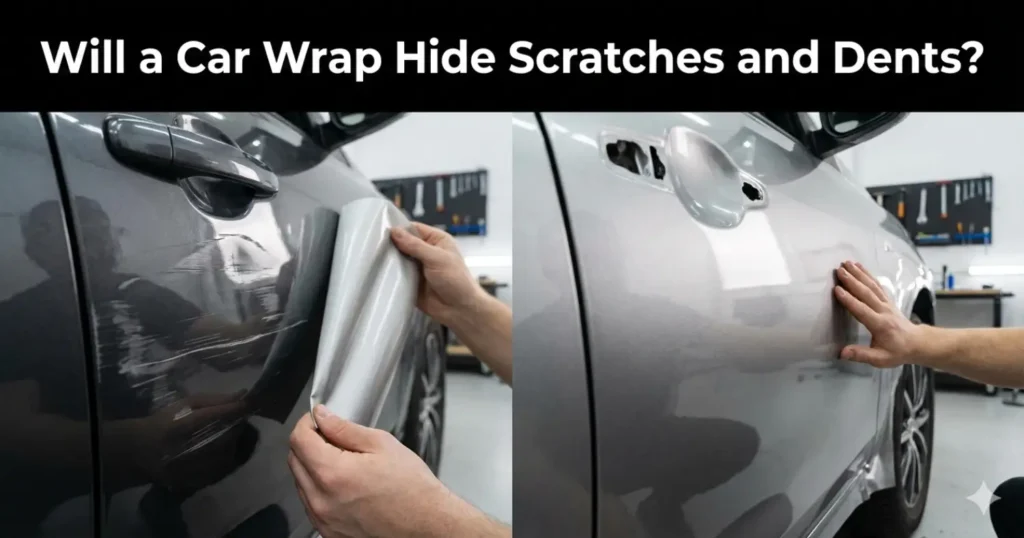
For shallow scratches—especially those that live in the clear coat—vinyl can often reduce visibility dramatically. High-quality wrap film is thick enough to soften the appearance of minor defects, particularly when the surface is cleaned and properly prepped.
Wraps commonly help conceal:
- Light clear-coat scratches
- Small scuffs
- Mild hazing from old waxes or washing
This is one reason wraps are popular for:
- Daily drivers in Toronto
- Lease vehicles nearing return
- Fleet vehicles that need a cleaner look fast
Deeper scratches: sometimes, but not always
If a scratch is deep enough to catch a fingernail, it may show through. Vinyl doesn’t fill grooves—it conforms to them. Deep scratches often have raised paint edges, and those edges can “telegraph” through the wrap, especially under certain finishes.
Deep scratches may still be visible if they:
- Expose primer or bare metal
- Have sharp edges or peeling paint
- Run across a body line where tension is higher
In these cases, a small amount of prep or repair may be recommended before wrapping.
Will a Car Wrap Hide Dents?
Small dents: usually still visible
This is where expectations need to be clear. Vinyl wrap film is not body filler. It will not level out dents. Even small door dings can remain visible once wrapped—sometimes more so—because vinyl can change how light reflects across a panel.
A dent may look more noticeable under:
- Gloss finishes (high reflectivity)
- Metallic finishes (light catches texture)
- Dark colours (shadows show deformation)
Larger dents and creases: no
Larger dents, creases, or distorted panels should be repaired before wrapping. Applying vinyl over significant deformation can:
- Reduce adhesion over time
- Create visible distortion
- Shorten wrap lifespan
- Increase risk of lifting on edges
For many vehicles in Mississauga, Brampton, and Vaughan, paintless dent repair (PDR) is often the most cost-effective first step before a wrap is installed.
Wrap vs Paint: Which Hides Damage Better?
Paint can hide scratches, but only after sanding, filling, priming, and refinishing. A wrap can visually improve a surface with minor imperfections, but it does not replace proper bodywork.
| Damage Type | Wrap Result | Paint Result |
|---|---|---|
| Light scratches | Often hidden | Fully hidden |
| Deep scratches | May show | Requires repair + repaint |
| Small dents | Visible | Requires repair + repaint |
| Creases / major dents | Not suitable | Requires repair + repaint |
| Rust | Not suitable | Must be repaired first |
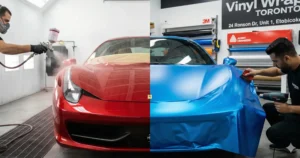
For many drivers, the decision comes down to cost, downtime, and goals—especially when comparing full refinishing vs. a colour change wrap.
Why Surface Preparation Matters So Much
Wrap success is mostly determined before the vinyl is even applied. Proper prep improves:
- Adhesion
- Appearance
- Longevity
- Warranty confidence
At Vinyl Wrap Toronto, wrap prep typically includes:
- Damage and paint-condition inspection
- Deep clean and decontamination
- Adhesion testing on questionable areas
- Light sanding where needed (only if appropriate)
- Recommendations for repairs when necessary
Skipping prep may save money today, but it can lead to:
- Visible imperfections
- Premature lifting
- Bubbling
- Reduced lifespan
Ontario winters make this even more important. Road salt and moisture can accelerate corrosion under compromised paint.
When Repairs Should Happen Before Wrapping
A wrap should not be installed over these issues:
- Rust (even small spots)
- Peeling paint or clear coat failure
- Cracked panels or bumper damage
- Dents that distort body lines
- Deep scratches with flaking edges
Wrapping over rust is especially risky. Rust continues to spread underneath, and eventually the vinyl loses adhesion. In most cases, correcting rust and stabilizing the surface is the right move before a wrap.
Finish Choice: Which Wrap Finishes Hide Imperfections Best?
Not all finishes behave the same. Finish selection can help reduce the appearance of minor issues, especially light scratching.
| Finish Type | Hides Minor Scratches | Notes |
|---|---|---|
| Matte | High | Diffuses reflections well |
| Satin | Medium | Softer shine, balanced look |
| Gloss | Low | Highlights texture and dents |
| Metallic | Low | Reflective, shows surface detail |
| Textured (carbon fibre, brushed) | Medium–High | Pattern can distract from minor flaws |
Vehicles with minor paint wear often look best in matte or satin. Gloss finishes look incredible on clean panels but are less forgiving when the surface isn’t perfect.
A full range of finishes and colours is available on the car wrap colours page.
Typical Costs: Scratch Repair vs Wrap in the GTA
Costs vary by vehicle and severity of damage, but these ranges are realistic for the Toronto/GTA market.
| Service | Typical Cost Range (GTA) |
|---|---|
| Minor scratch correction (localized) | $300 – $800 |
| Paintless dent repair (PDR) | $200 – $1,000 |
| Single-panel repaint | $800 – $2,000 |
| Full repaint (quality) | $6,000 – $15,000+ |
| Full vehicle wrap | $3,000 – $5,500 |
For a deeper breakdown, the guide to understanding car wrap costs covers what affects pricing (vehicle size, vinyl type, prep, and design).
Can a Wrap Protect Against Future Scratches?
Wrap film can protect against many types of light wear. Premium vinyl helps reduce damage from:
- Minor abrasions
- UV exposure
- Road debris
- Light scuffs
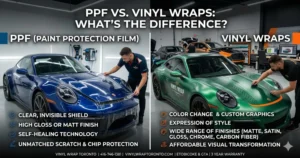
That said, vinyl isn’t paint protection film (PPF). It adds protection, but it isn’t designed as a rock-chip armour solution. Proper maintenance matters, and the best practices are covered in protect your vinyl vehicle wrap article.
Common Mistakes When Wrapping Over Damage
These are the most frequent issues seen when a wrap is installed over poor surfaces:
- Assuming vinyl will “fill” dents
- Choosing gloss on panels with visible defects
- Wrapping over rust or peeling clear coat
- Skipping repairs to save money upfront
- Hiring installers without proper experience
High-quality materials (3M, Avery Dennison, Hexis) help—but preparation and installation quality are what make a wrap look premium and last.
When Wrapping Still Makes Sense (Even With Minor Damage)
Wrapping can still be the right choice when the goal is improved appearance and protection, and damage is minor.
Wrapping often works well for:
- Daily-driven vehicles with light scratches
- Lease vehicles needing cosmetic improvement
- Business vehicles that must look professional quickly
- Fleet vehicles where downtime matters
For readers exploring options for a car wrap solution, a quick inspection is usually the best next step to confirm what prep is needed.
FAQ: Will a Car Wrap Hide Scratches and Dents?
-
Will a car wrap hide scratches completely?
A wrap often hides light scratches in the clear coat. Deep scratches may still show through without prep.
-
Will a car wrap hide dents?
No. Vinyl conforms to the panel shape, so dents and creases remain visible.
-
Should dents be repaired before wrapping?
Yes. Paintless dent repair is often recommended so the wrap finishes smooth and lasts longer.
-
Will wrapping over rust cause problems?
Yes. Rust continues to spread under vinyl and can cause lifting and failure.
-
Which wrap finish is best for hiding imperfections?
Matte and satin finishes hide minor flaws better than gloss or metallic finishes.
-
Is wrapping cheaper than repainting?
In many GTA cases, yes—especially when comparing full colour changes or premium finishes.
Conclusion: Will a Car Wrap Hide Scratches?
So, will a car wrap hide scratches? In many cases, yes—if the scratches are minor and the surface is properly prepped. But when it comes to dents, creases, rust, or peeling paint, wrapping isn’t a shortcut. Those issues typically require repair first for the best appearance and long-term durability.
For vehicles in Etobicoke, Toronto, Mississauga, Brampton, Vaughan, and the GTA, our team can inspect the paint and panels, explain what will show through, and recommend the most cost-effective approach.
For a local quote and honest assessment, contact us today.